
College Park, Maryland
40,800 students · 12% international · $40,000 a year
No reviews yet
Choosing between universities and colleges in Maryland? Start here: there are 26 of them. Not sure where to start? Pick a city or a subject below, then read what students say about the ones that catch your eye.
 Johns Hopkins University26% of students are international
 Coppin State University$13,789 a year
 Baltimore10 colleges
 Annapolis2 colleges
 Bowie1 college
 Chestertown1 collegeCollege Park1 college
 Emmitsburg1 college
 Frederick1 college
 Frostburg1 collegeLaurelLaurel1 collegeOwings MillsOwings Mills1 college
 Princess Anne1 collegeSalisbury, MarylandSalisbury, Maryland1 college
 St. Mary's City1 college
 Takoma Park1 college
 Towson1 college
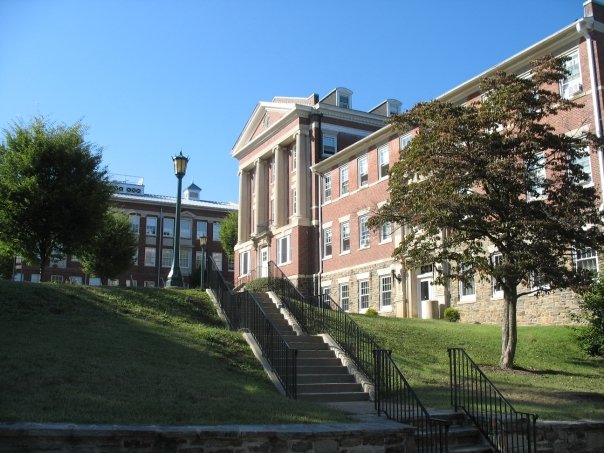 Westminster1 college
College Park, Maryland
40,800 students · 12% international · $40,000 a year
No reviews yet
Baltimore, Maryland
30,400 students · 26% international · $63,000 a year
No reviews yet

Baltimore, Maryland
14,100 students · 18% international · $30,000 a year
No reviews yet
 HBCU
Baltimore, Maryland
9,800 students · 10% international · $19,000 a year
No reviews yet
Salisbury, Maryland
7,000 students · 1% international · $21,000 a year
No reviews yet
 HBCU
Bowie, Maryland
6,400 students · 3% international · $20,000 a year
No reviews yet

Baltimore, Maryland
5,100 students · 2% international · $55,000 a year
No reviews yet

Frostburg, Maryland
4,100 students · 13% international · $25,000 a year
No reviews yet
Owings Mills, Maryland
3,500 students · 1% international · $40,000 a year
No reviews yet

Baltimore, Maryland
3,100 students · 3% international · $23,000 a year
No reviews yet
Westminster, Maryland
2,900 students · 8% international · $50,000 a year
No reviews yet
HBCUPrincess Anne, Maryland
2,800 students · 3% international · $20,000 a year
No reviews yet
Emmitsburg, Maryland
2,500 students · 5% international · $47,000 a year
No reviews yet
HBCUBaltimore, Maryland
2,100 students · 5% international · $14,000 a year
No reviews yet

Baltimore, Maryland
1,900 students · 22% international · $55,000 a year
No reviews yet
Baltimore, Maryland
1,800 students · 1% international · $42,000 a year
No reviews yet
St. Mary's City, Maryland
1,600 students · 0% international · $31,000 a year
No reviews yet

Chestertown, Maryland
900 students · 3% international · $54,000 a year
No reviews yet
Laurel, Maryland
900 students · 4% international · $27,000 a year
No reviews yet
Takoma Park, Maryland
700 students · 14% international · $25,000 a year
No reviews yet

Annapolis, Maryland
600 students · 14% international · $39,000 a year
No reviews yet
Studied There lists 26 colleges in Maryland, across 16 cities.
Of those with published figures, University of Maryland has the most students: 40,813.
Johns Hopkins University (7,792), University of Maryland (4,714) and University of Maryland, Baltimore County (2,515) have the most international students.
The median published out-of-state tuition and fees across 24 colleges is $35,219 a year. The lowest is Coppin State University at $13,789.
The median acceptance rate across 25 colleges is 77%. The most selective is Johns Hopkins University, which admitted 7.6% of applicants.
That depends on what you want: the course, the price, the city and the kind of place it is. On Studied There a college is ranked by what verified students say once it has 10 reviews; until then the list is sorted by size. Use Sort by to see the most international or the cheapest first, and read reviews from students from your own country before you decide.
Colleges here estimate food and housing off campus at a median of $13,900 for the academic year. Add tuition, books, health insurance and flights on top. Each college's page shows its own estimate.
Not always. Many colleges are test-optional: they'll look at your SAT or ACT score if you send one but don't require it, and a few ignore scores completely. Each college's page says what it asks for.
Early decision and early action deadlines are often in November, and regular decision deadlines are often in early January, for courses starting the following fall. Leave time after you're admitted to get your I-20 and book a visa interview.
Usually, yes. Public colleges charge lower tuition to residents of their own state, and international students pay the higher out-of-state rate. Private colleges usually charge everyone the same.
On an F-1 visa you can usually work on campus for up to 20 hours a week while classes are in session. After you graduate, Optional Practical Training lets you work in your field for up to 12 months, and up to 24 months more after a STEM degree.
Where the figures come from
Photos from Wikimedia Commons


