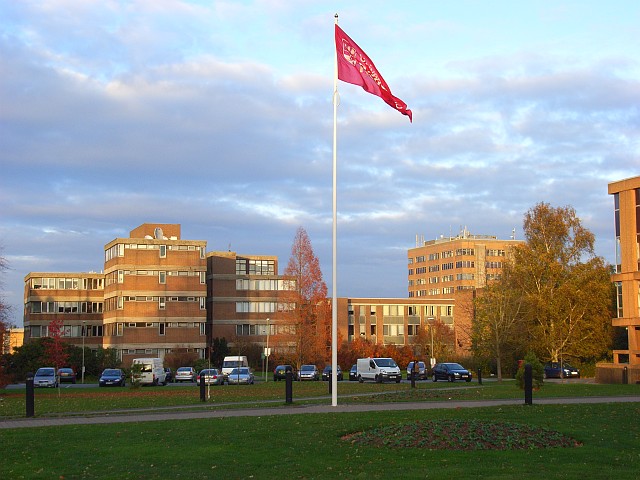


University of Reading
Reading · England · UK · PublicReading
The University of Reading is a public university in Reading, England, founded in 1926. It has 21,370 students, and 18% of them are international.
Work at the University of Reading? Claim this profile
5 photos · swipe to see more
Key facts about University of Reading
- Founded
- 1926
- Type
- Public
- Students
- 21,370
- International students
- 18%
- Degrees it can award
- Bachelor's, master's and PhD
- Regulated by
- Office for Students
- Teaching rating (TEF)
- Silver
- Typical entry standard
- 112–127 UCAS points
What students say about University of Reading
Be the first student to review the University of Reading
Studied here? Tell the next student from your country what it's really like: the teaching, the city, the help you got as an international student. We check you studied here, then a person reads your review before it goes live.
Courses and academics at University of Reading
What you can study at the University of Reading, by level.
- Accounting and FinanceUndergraduate
- ArchitectureUndergraduate
- Art and DesignUndergraduate
- BiologyUndergraduate
- Business and ManagementUndergraduate
- ChemistryUndergraduate
- Computer ScienceUndergraduate
- Data ScienceUndergraduate
- EconomicsUndergraduate
- EducationUndergraduate
Admissions and entry requirements at University of Reading
On a typical course at the University of Reading, the middle student started with 112–127 UCAS points. UCAS points are how UK universities score A-levels and similar qualifications; each course says which qualifications from your country it accepts.
- Typical entry standard
- 112–127 UCAS points
Requirements vary by course.
University of Reading for international students
International students make up 18% of students at the University of Reading: 3,850 students.
- International students
- 18%
- Number of international students
- 3,850
University of Reading campus and location
Frequently asked questions about University of Reading
Where is the University of Reading?
The University of Reading is in Reading, England. For a Student visa you have to show you can cover living costs of £1,171 a month here, which is a good guide to the minimum you'll spend. The cost of living page for Reading has the details.
How many students are at the University of Reading?
The University of Reading has 21,370 students, and 18% of them are international (3,850 people). A big university usually means more courses, societies and facilities, but bigger first-year classes.
Is the University of Reading good for international students?
International students make up 18% of students here, so you'll be part of a smaller international community. Nobody has reviewed it on Studied There yet, so if you studied here, your review would help the next student a lot. The best guide is what students from your own country say: how they found the teaching, support, accommodation and making friends. Filter the reviews by home country to read theirs.
How hard is it to get into the University of Reading?
On a typical course at the University of Reading, the middle student started with 112–127 UCAS points. UCAS points are how UK universities score A-levels and similar qualifications; each course says which qualifications from your country it accepts. International applicants usually need an English test such as IELTS Academic as well as their grades, unless they studied in English.
What subjects does the University of Reading teach?
The University of Reading teaches 19 of the subjects we track, including Accounting and Finance, Architecture, Art and Design, Biology, and Business and Management. The subjects section shows which levels each is taught at.
Does the University of Reading have student accommodation?
Most UK universities offer rooms in halls, and many guarantee one to first-year international students who apply by their deadline. Check the University of Reading's accommodation pages for prices and deadlines, and apply as soon as you accept your offer.
How do I apply to the University of Reading?
For an undergraduate degree, apply through UCAS, usually by January for courses starting that autumn, and choose up to five courses. For a master's or PhD, apply to the University of Reading directly. Once you've met the conditions of your offer, the university sends you a Confirmation of Acceptance for Studies (CAS), which you need to apply for your Student visa.
Can I work while studying at the University of Reading?
Usually, yes: most degree-level students on a Student visa can work part-time during term and full-time in the holidays, and the exact limit is on your visa. After you graduate, the Graduate route lets you stay and work, or look for work, for two years if you apply by 31 December 2026 and 18 months if you apply from 1 January 2027.
Can I bring my family if I study at the University of Reading?
Usually not on a taught course. Since January 2024, international students on a Student visa can only bring family members if they're on a postgraduate research course, such as a PhD, or a government-funded scholarship lasting more than six months.
When does the academic year start at the University of Reading?
Most courses start in late September or early October. Some universities also have January starts, mostly for master's courses.
Universities similar to University of Reading
 Russell Group
 Russell Group
 Russell Group
 Russell Group

Manchester, England
39,400 students · 9% international
No reviews yet
Plan your move to the UK
Study in the UK: how to choose, apply, pay and get your visaThe whole plan for studying in the UK: where to live, how to apply, what it costs, the Student visa and working after you graduate.UK Graduate visa: who qualifies, how long it lasts and how to applyWho can stay on to work after a UK degree, how long the Graduate visa lasts, what it costs and how to time your application.Student visa UK: requirements, money you need and timelineWhat you need for a UK Student visa, how much money to show, what it costs and when to apply so you arrive on time.UCAS Clearing for international students: how to find a placeHow international students use UCAS Clearing to find a UK university place late, and how to get the CAS, money and visa sorted in time.
Sources and photo credits
Where the figures come from
- Founded, Type: Wikidata
- Students, International students, Number of international students: HESA 2024/25
- Degrees it can award, Regulated by: OfS Register
- Teaching rating (TEF): TEF 2023
- Typical entry standard: Discover Uni 2024/25
- Subjects: Discover Uni 2026/27
Photos from Wikimedia Commons
- University of Reading: Andrew Smith, CC BY-SA 2.0
- University of Reading (photo 2): Baileyuk, CC BY-SA 4.0
- University of Reading (photo 3): Chris j wood, CC BY-SA 4.0
- University of Reading (photo 4): Chris j wood, CC BY-SA 4.0
- University of Reading (photo 5): Chris j wood, CC BY-SA 4.0
- University of Reading (photo 6): Tim Landy, CC BY-SA 4.0
- University of Reading (photo 7): BrayLockBoy, CC BY-SA 4.0
- King's College London: Flaming Ferrari (talk), Public domain
- Manchester Metropolitan University: David Dixon, CC BY-SA 2.0
- The Open University: Chmee2, CC BY-SA 3.0
- University College London: Diliff, CC BY-SA 3.0
- University of Birmingham: Simonham, CC BY-SA 3.0
- University of Manchester: DrPhoenix, CC BY-SA 3.0


