

Best colleges and universities in the US, page 26
Looking at colleges and universities in the US? There are 1,508 to choose from. Search by name, or browse by city and subject, and hear from students who've studied there.

Why study in the US?
American degrees suit people who aren't sure yet. You take classes across lots of subjects in your first year or two before you pick a major, and changing your mind is normal. Most bachelor's degrees take four years.
The choice is enormous: we list 1,508 four-year colleges, from huge public universities with their own sports stadiums to small liberal arts colleges where your professors will know your name. And you won't be on your own: there were almost 1.2 million international students in the US at the last count.
You can work while you study and afterwards. During term you can usually work on campus for up to 20 hours a week. After you graduate, Optional Practical Training (OPT) lets you work in your field for up to 12 months, and up to 24 months more after a STEM degree.
- 4 years
- for most bachelor's degrees, choosing your major along the way
- 1.18 million
- international students in the US at the last count
- Up to 3 years
- of work in your field after a STEM degree (12 months of OPT plus a 24-month extension)
- 1,508
- colleges to choose from, in 1,036 cities
The US at a glance
Cities in the US
 New York City23 colleges
 Boston17 colleges
 Chicago14 colleges
 Baltimore10 colleges
 Los Angeles10 colleges
 Atlanta9 colleges
 Houston9 colleges
 Philadelphia9 colleges
 Saint Louis9 colleges
 Saint Paul8 colleges
 San Antonio8 colleges
 Cincinnati7 colleges
 Milwaukee7 colleges
 New Orleans7 colleges
 Pittsburgh7 colleges
 Portland, Oregon7 colleges
 Brooklyn6 colleges
 Buffalo6 colleges
 Dallas, Texas6 colleges
 Memphis6 colleges
 Nashville6 colleges
 Omaha6 colleges
 Providence6 colleges
 Charlotte5 colleges
 Claremont5 colleges
 Columbia, South Carolina5 colleges
 Columbus, Ohio5 colleges
 Indianapolis5 colleges
 Kansas City5 colleges
 Raleigh5 colleges
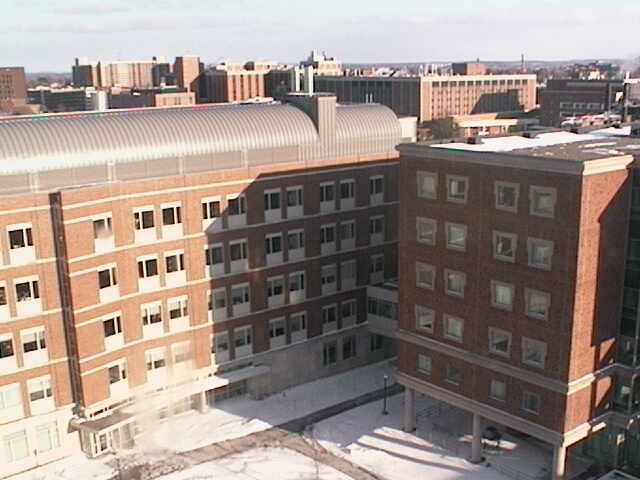 Rochester, New York5 colleges
 San Francisco5 colleges
 Seattle5 colleges
 Springfield, Missouri5 colleges
 Worcester5 colleges
 Albany, New York4 colleges
 Austin4 colleges
 Cambridge4 colleges
 Charleston, South Carolina4 colleges
 Cleveland, Ohio4 colleges
Colleges in the US

Kirkland, Washington
1,000 students · 12% international · $36,000 a year
No reviews yet
RM
Billings, Montana
1,000 students · 5% international · $33,000 a year
No reviews yet

Buckhannon, West Virginia
1,000 students · 8% international · $33,000 a year
No reviews yet
BU
Bluefield, Virginia
1,000 students · 1% international · $30,000 a year
No reviews yet

Due West, South Carolina
1,000 students · 0% international · $37,000 a year
No reviews yet

Minneapolis, Minnesota
1,000 students · 1% international · $29,000 a year
No reviews yet

New York City, New York
1,000 students · 14% international · $47,000 a year
No reviews yet
UT
Pulaski, Tennessee
1,000 students · 7% international · $11,000 a year
No reviews yet

Watertown, Wisconsin
1,000 students · 2% international · $20,000 a year
No reviews yet


Olivet, Michigan
1,000 students · 0% international · $33,000 a year
No reviews yet
BM
Blue Mountain, Mississippi
1,000 students · 3% international · $19,000 a year
No reviews yet

Buena Vista, Virginia
1,000 students · 2% international · $20,000 a year
No reviews yet


 HBCU
Raleigh, North Carolina
1,000 students · 9% international · $17,000 a year
No reviews yet

Kings Point, New York
1,000 students · 0% international
No reviews yet
IC
Jacksonville, Illinois
1,000 students · 6% international · $37,000 a year
No reviews yet
GC
Wyoming, Michigan
1,000 students · 0% international · $15,000 a year
No reviews yet

Misenheimer, North Carolina
1,000 students · 3% international · $34,000 a year
No reviews yet

Salina, Kansas
1,000 students · 4% international · $33,000 a year
No reviews yet

New London, New Hampshire
1,000 students · 1% international · $18,000 a year
No reviews yet
JU
Knoxville, Tennessee
1,000 students · 5% international · $20,000 a year
No reviews yet

Pineville, Louisiana
1,000 students · 6% international · $20,000 a year
No reviews yet

Claremont, California
900 students · 10% international · $66,000 a year
No reviews yet

OW
Bartlesville, Oklahoma
900 students · 7% international · $31,000 a year
No reviews yet
 HBCU
Raleigh, North Carolina
900 students · 6% international · $17,000 a year
No reviews yet

BC
Sioux City, Iowa
900 students · 8% international · $36,000 a year
No reviews yet
PU
Angwin, California
900 students · 3% international · $35,000 a year
No reviews yet
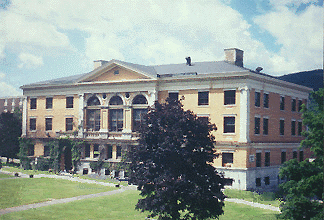
North Adams, Massachusetts
900 students · 1% international · $21,000 a year
No reviews yet
MC
Montreat, North Carolina
900 students · 1% international · $34,000 a year
No reviews yet
WI
Babson Park, Florida
900 students · 10% international · $32,000 a year
No reviews yet
CC
Lookout Mountain, Georgia
900 students · 3% international · $40,000 a year
No reviews yet
NA
Stafford, Texas
900 students · 33% international · $13,000 a year
No reviews yet

TC
CC
Columbus, Ohio
900 students · 1% international · $40,000 a year
No reviews yet

Chestertown, Maryland
900 students · 3% international · $54,000 a year
No reviews yet

Chickasha, Oklahoma
900 students · 7% international · $20,000 a year
No reviews yet


Bloomfield, New Jersey
900 students · 3% international · $31,000 a year
No reviews yet
MC
Des Moines, Iowa
900 students · 0% international · $17,000 a year
No reviews yet
SU
BL
Mankato, Minnesota
900 students · 15% international · $30,000 a year
No reviews yet
CT
Laurel, Maryland
900 students · 4% international · $27,000 a year
No reviews yet

Greensboro, North Carolina
900 students · 0% international · $20,000 a year
No reviews yet
Showing 1,251 to 1,300 of 1,508 colleges
Popular subjects in the US
How to apply to a US college from abroad
- Build your listPick a mix of colleges and check what each one asks for: transcripts, essays, recommendations, and whether it wants SAT or ACT scores.
- Take an English test if you need oneMost colleges accept the TOEFL iBT, IELTS Academic or the Duolingo English Test. Many waive it if you studied in English.
- ApplyMost colleges take the Common App, and some have their own portal. Early deadlines are often in November and regular deadlines in January.
- Show you can pay and get your I-20Once you're admitted, send the college proof that you can cover at least your first year. It then issues your Form I-20.
- Apply for your F-1 visaPay the SEVIS fee, fill in the visa form and book an interview at a US embassy or consulate. You can arrive up to 30 days before your program starts.
More ways to explore the US
- New York117 colleges
- California94 colleges
- Pennsylvania91 colleges
- Texas81 colleges
- Massachusetts67 colleges
- Ohio65 colleges
- Illinois55 colleges
- North Carolina54 colleges
- Georgia47 colleges
- Florida46 colleges
- Missouri44 colleges
- Indiana42 colleges
- Michigan42 colleges
- Virginia41 colleges
- Tennessee38 colleges
- Minnesota36 colleges
- Wisconsin35 colleges
- South Carolina33 colleges
- Accounting and Finance909 colleges
- Architecture210 colleges
- Art and Design865 colleges
- Biology1,256 colleges
- Business and Management1,344 colleges
- Chemistry589 colleges
- Computer Science1,041 colleges
- Data Science304 colleges
- Economics513 colleges
- Education1,213 colleges
- Engineering557 colleges
- English921 colleges
- Film and Media412 colleges
- History784 colleges
- Law218 colleges
- Mathematics601 colleges
- Nursing863 colleges
- Pharmacy87 colleges
Questions about studying in the US
How many colleges in the US are there?
Studied There lists 1,508 colleges in the US, across 1,036 cities.
Which is the largest of the colleges in the US?
Of those with published figures, Arizona State University has the most students: 79,593.
Which colleges in the US have the most international students?
New York University (19,373), Columbia University (13,898) and University of Southern California (12,754) have the most international students.
How much is tuition at colleges in the US for international students?
The median published out-of-state tuition and fees across 1,472 colleges is $30,992 a year. The lowest is Mayo Medical School at $3,257.
What is the acceptance rate at colleges in the US?
The median acceptance rate across 1,370 colleges is 77%. The most selective is California Institute of Technology, which admitted 3.1% of applicants.
What are the best colleges in the US?
That depends on what you want: the course, the price, the city and the kind of place it is. On Studied There a college is ranked by what verified students say once it has 10 reviews; until then the list is sorted by size. Use Sort by to see the most international or the cheapest first, and read reviews from students from your own country before you decide.
How much does it cost to live in the US as a student?
Colleges here estimate food and housing off campus at a median of $11,920 for the academic year. Add tuition, books, health insurance and flights on top. Each college's page shows its own estimate.
Do I need the SAT or ACT for colleges in the US?
Not always. Many colleges are test-optional: they'll look at your SAT or ACT score if you send one but don't require it, and a few ignore scores completely. Each college's page says what it asks for.
When should I apply to colleges in the US?
Early decision and early action deadlines are often in November, and regular decision deadlines are often in early January, for courses starting the following fall. Leave time after you're admitted to get your I-20 and book a visa interview.
Do international students pay more at public colleges?
Usually, yes. Public colleges charge lower tuition to residents of their own state, and international students pay the higher out-of-state rate. Private colleges usually charge everyone the same.
Can international students work in the US?
On an F-1 visa you can usually work on campus for up to 20 hours a week while classes are in session. After you graduate, Optional Practical Training lets you work in your field for up to 12 months, and up to 24 months more after a STEM degree.
Plan your move to the US
Study in the USA: how to choose, apply, pay and get your visaThe whole plan for studying in the USA: where to go, choosing a college, applying, tuition, the F-1 visa and working during and after your degree.F1 visa: how to get a US student visa, step by stepEvery step to an F-1 student visa, from your I-20 and the SEVIS fee to the interview, arriving in the US and keeping your status.OPT and STEM OPT: how to work in the US after your degreeHow to use OPT and the 24-month STEM OPT extension to work in the US after you graduate, from your DSO's recommendation to your reporting duties.
Sources and photo credits
Where the figures come from
- Student numbers and international share: IPEDS fall 2023
- Fees: IPEDS 2023-24
- Acceptance rates: IPEDS fall 2023
- International students in the US at the last count: IIE Open Doors 2025, checked November 2026
- Of work in your field after a STEM degree (12 months of OPT plus a 24-month extension): USCIS, checked November 2026
- Living costs: Colleges' own cost-of-attendance estimates (IPEDS)
- Numbers of universities, colleges and cities: Studied There directory
Photos from Wikimedia Commons
- US: Ad Meskens, CC BY-SA 3.0
- New York City: Fred Hsu on en.wikipedia, CC BY-SA 4.0
- Boston: Robert Linsdell from St. Andrews, Canada, CC BY 2.0
- Chicago: Lol19, CC BY-SA 3.0
- Baltimore: Quintin Soloviev, CC BY 4.0
- Los Angeles: Alek Leckszas, CC BY-SA 4.0
- Atlanta: AtlChampion, CC BY-SA 4.0
- University of Houston: Brian Reading, CC BY-SA 4.0
- Philadelphia: 颐园居, CC BY-SA 4.0
- Saint Louis: Sam valadi, CC BY 2.0
- Saint Paul: Quintin Soloviev, CC BY 4.0
- University of the Incarnate Word: Zereshk, CC BY 3.0
- Cincinnati: Ynsalh, CC BY-SA 4.0
- Milwaukee: Isaac Rowlett, CC BY-SA 4.0
- New Orleans: thepipe26, CC BY 2.0
- Pittsburgh: Russell Sekeet, CC BY 2.0
- Portland State University: Visitor7, CC BY-SA 3.0
- Brooklyn: Newyork10r at English Wikipedia, Public domain
- Buffalo: Quintin Soloviev, CC BY 4.0
- Dallas: Gattacal, CC BY-SA 4.0
- Memphis: Quintin Soloviev, CC BY 4.0
- Nashville: King of Hearts, CC BY-SA 4.0
- Omaha: WiinterU, CC0
- Providence: Quintin Soloviev, CC BY 4.0
- Charlotte: Amebrahtu1997, CC BY-SA 4.0
- Claremont: Sdkb, CC BY-SA 4.0
- Columbia: Akhenaton06, CC BY-SA 3.0
- Ohio State University: Michael Barera, CC BY-SA 4.0
- Indianapolis: Miyin2, CC BY-SA 4.0
- Kansas City: Stephen Edmonds, CC BY-SA 3.0
- Raleigh: Abhiram Juvvadi, CC BY-SA 4.0
- University of Rochester: Wikimedia Commons contributor, Public domain
- San Francisco: Lightandtruth, CC BY-SA 4.0
- University of Washington-Seattle Campus: Martin Kraft, CC BY-SA 3.0
- Evangel University: Unknown authorUnknown author, Public domain
- Worcester: Terageorge, CC BY-SA 3.0
- Albany: Quintin Soloviev, CC BY 4.0
- Austin: Quintin Soloviev, CC BY 4.0
- Harvard University: chensiyuan, CC BY-SA 4.0
- Charleston: Khanrak, CC BY-SA 3.0
- Cleveland: Erik Drost, CC BY 4.0
- Hult International Business School: User: undisclosed, CC BY-SA 4.0
- Knox College: en:User:Jjacobsmeyer, CC BY-SA 3.0
- Northwest University: Cps john at English Wikipedia, CC BY-SA 3.0
- West Virginia Wesleyan College: JERRYE & ROY KLOTZ, M.D., CC BY-SA 4.0
- Erskine College: Upstateherd, CC BY-SA 4.0
- North Central University: Gobonobo, CC BY-SA 3.0
- Cooper Union: David Shankbone, CC BY-SA 3.0
- Maranatha Baptist University: MBBC, Public domain
- Spring Hill College: Altairisfar, Public domain
- Hilbert College: Andre Carrotflower, CC BY-SA 4.0
- University of Olivet: Esq4rt, CC BY-SA 4.0
- Southern Virginia University: Carol M. Highsmith, Public domain
- Franklin College: User:Mingusboodle, Public domain
- Wilmington College: Wilmyfan1, CC BY-SA 4.0
- Shaw University: Daderot, Public domain
- United States Merchant Marine Academy: United States Merchant Marine Academy, Public domain
- Pfeiffer University: Schlachtenbummler, CC BY-SA 3.0
- Kansas Wesleyan University: Daniel Bethe, CC BY-SA 3.0
- Colby–Sawyer College: Josephbrophy at English Wikipedia, Public domain
- Louisiana Christian University: Billy Hathorn at en.wikipedia, CC BY-SA 3.0
- Harvey Mudd College: The original uploader was Imagine at English Wikipedia., CC BY 2.5
- Beloit College: Sifiboy31 at English Wikipedia, Public domain
- St. Augustine's University: Mx. Granger, CC0
- Lake Erie College: User:Dkocan, Public domain
- Massachusetts College of Liberal Arts: David Langston, CC0
- Ursuline College: SilentMatt Psychedelic, CC BY-SA 4.0
- Washington College: JERRYE & ROY KLOTZ, M.D., CC BY-SA 4.0
- University of Science and Arts of Oklahoma: Crimsonedge34, CC BY-SA 3.0
- Maine Maritime Academy: Billy Hathorn, CC BY-SA 3.0
- Bloomfield College: Sandy visionquest, CC BY-SA 4.0
- Greensboro College: NCNJ Collegian, CC BY-SA 4.0


